

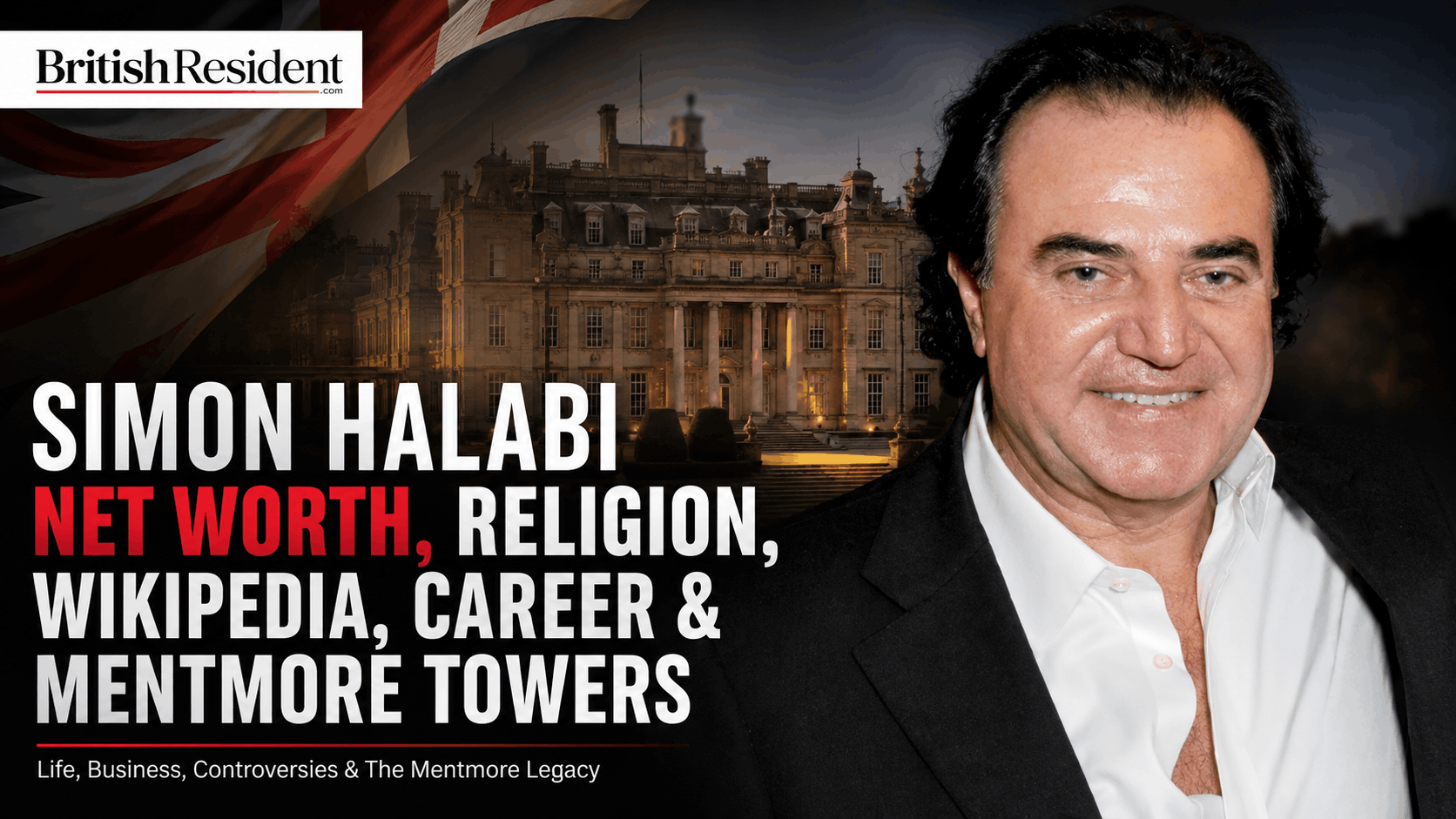
Simon Halabi is a Syrian-born British property investor who became one of Britain’s richest businessmen before losing much of his fortune after the 2008 global financial crisis. He built a large commercial property portfolio, invested in landmark developments like The Shard, and owned the historic Mentmore Towers estate. His career combined rapid business growth with ambitious investments across London’s property market. Later, financial difficulties, bankruptcy proceedings, family trust disputes, and legal matters brought significant public attention. Despite maintaining a low public profile today, Simon Halabi remains linked with several business entities. This guide explores his early life, career, net worth, major properties, personal life, legal history, and current status.
Quick Bio
| Attribute | Details |
| Full Name | Bassam Simon Halabi |
| Common Name | Simon Halabi |
| Profession | Property Investor and Businessman |
| Known For | Commercial property investments and Mentmore Towers |
| Date of Birth | August 1958 |
| Age | 67 years (as of 2026) |
| Birthplace | Syria |
| Nationality | British |
| Ethnic Background | Syrian |
| Residence | United Kingdom and Switzerland (publicly reported) |
| Industry | Commercial Real Estate |
| Peak Net Worth | Around £3 billion |
| Peak Ranking | Among Britain’s richest property investors |
| Major Investments | The Shard, White Tower Portfolio, Mentmore Towers |
| Other Business Interests | Esporta, luxury property investments |
| Marital Status | Divorced |
| Former Spouse | Urte Halabi |
| Children | One son, Samuel Valentino Halabi |
| Financial Turning Point | 2008 Global Financial Crisis |
| Bankruptcy | Declared bankrupt in 2010 |
| Current Public Profile | Private businessman with limited public appearances |
Who Is Simon Halabi?
Simon Halabi is a Syrian-born British property investor who built a successful career in London’s commercial property market. He became widely known for acquiring valuable office buildings, investing in landmark developments, and managing large real estate assets. His business success placed him among Britain’s wealthiest individuals before the global financial crisis changed his financial position. Today, Simon Halabi remains a recognised figure in British property history because of both his remarkable business achievements and the challenges that followed.
Early Life
Bassam Simon Halabi was born in Syria in August 1958. He spent his early years in a business-oriented family before moving to the United Kingdom as a teenager. Public information about his childhood remains limited, as he has always kept his private life away from media attention. His family’s financial background provided early exposure to business, which later influenced his interest in property investment and commercial development.
Family Background
Simon Halabi came from a wealthy Syrian family with established business interests. His father was reportedly a successful businessman, giving the family a strong financial foundation. After settling in Britain, Halabi focused on creating his own business identity rather than relying solely on family wealth. Over time, he expanded his investments and became known for building an independent property empire across central London.
Education
Very little verified information exists about Simon Halabi’s formal education. Unlike many well-known entrepreneurs, he has not publicly discussed his academic background or university studies. Most published reports focus on his practical experience in property investment rather than educational qualifications. His career suggests he developed expertise through hands-on business experience, market knowledge, and commercial property transactions.
Move to Britain
Simon Halabi moved from Syria to the United Kingdom during his teenage years. Britain offered greater opportunities within the growing property market, especially in London. After arriving, he gradually entered the real estate sector and gained valuable industry experience. His relocation proved important because it placed him in one of Europe’s largest commercial property markets, where he later built a highly valuable investment portfolio.
Simon Halabi’s Business Career
Simon Halabi built his reputation through commercial property investment and long-term asset growth. He entered the real estate industry during a period of strong market expansion in the United Kingdom. Over several decades, he acquired prime office buildings, developed strategic partnerships, and expanded into other businesses. His portfolio included landmark properties and high-value commercial assets, helping him become one of Britain’s most recognised property investors before the financial crisis reshaped his business empire.
First Steps in Property
Simon Halabi began his career by working in the British property sector before launching his own estate agency business. This early experience helped him understand commercial real estate, property valuation, and investment opportunities. He focused on acquiring valuable assets with strong growth potential. These foundations allowed him to build confidence in large-scale property transactions and prepare for more ambitious investments across central London.
Building a Property Empire
During the property boom, Simon Halabi expanded rapidly through carefully selected commercial investments. He purchased office buildings in prime London locations and assembled a valuable portfolio. His investment strategy focused on long-term appreciation and premium business districts. As property values increased, his wealth also grew significantly, making him one of the country’s leading real estate entrepreneurs and a familiar name in Britain’s business community.
White Tower Portfolio
One of Simon Halabi’s most important business assets was the White Tower portfolio. The collection included several prestigious office buildings located across central London. These commercial properties attracted major corporate tenants and represented a substantial share of his overall wealth. The portfolio demonstrated his focus on premium real estate and reinforced his position as a leading investor in London’s commercial property market.
Expansion into Other Businesses
Simon Halabi did not limit his investments to office properties alone. He acquired the Esporta health club business to diversify his portfolio beyond commercial real estate. He also joined an investment group interested in purchasing Aston Martin from Ford during 2007, although the bid was unsuccessful. These ventures showed his willingness to explore opportunities across different industries while continuing to prioritise property investment as his core business.
Simon Halabi and The Shard
Simon Halabi played an important role in the early development of The Shard, one of London’s most recognisable skyscrapers. His investment reflected his strategy of acquiring high-value assets with long-term growth potential. The project later became a global landmark, although Halabi exited before its completion. His involvement with The Shard remains one of the most discussed chapters of his business career because it highlights both his investment vision and the financial pressures that followed.
Ownership Stake
Simon Halabi became an early investor in The Shard development through a significant ownership interest. At one stage, he reportedly held about one-third of the project. The development aimed to transform London’s skyline with a mixed-use skyscraper containing offices, restaurants, hotels, and viewing spaces. His participation demonstrated confidence in the future value of premium London real estate and major regeneration projects.
Sale of the Investment
In 2008, Simon Halabi sold his stake in The Shard to Qatari investors during a difficult financial period. The transaction took place while disagreements and funding pressures surrounded the project. Reports stated that the sale price was far below the asset’s later market value. Selling the investment helped ease immediate financial demands, but it also ended his involvement in one of London’s most valuable developments.
Why the Deal Became Significant
The sale of The Shard stake later became a defining moment in Simon Halabi’s business story. As the building was completed and gained worldwide recognition, its value increased considerably. Many business commentators viewed the transaction as a missed financial opportunity caused by market conditions rather than investment judgement alone. Today, the deal is often discussed when explaining the rise, financial challenges, and changing fortunes of Simon Halabi’s property empire.
Simon Halabi and Mentmore Towers
Mentmore Towers is one of the most famous properties linked with Simon Halabi. The Grade I-listed country house became a central part of his long-term investment plans after its purchase through a family trust. Halabi hoped to restore the historic estate and transform it into a world-class luxury destination. However, financial difficulties stopped the redevelopment, leaving the project unfinished. Mentmore Towers remains closely associated with his business legacy and is often discussed alongside his property empire.
History of Mentmore Towers
Mentmore Towers stands in Buckinghamshire and was built between 1852 and 1854 for Baron Mayer Amschel de Rothschild. The mansion became known for its grand architecture, valuable art collections, and historical importance. Over the years, it served different purposes, including use by the Maharishi Foundation. Its architectural and cultural value made it one of Britain’s most recognised historic country houses.
Purchase by the Halabi Family
In 1999, a Halabi family trust purchased Mentmore Towers for about £3 million. The acquisition reflected Simon Halabi’s interest in preserving landmark buildings while creating valuable investment opportunities. The estate offered extensive grounds and a historic mansion suitable for large-scale redevelopment. The purchase also added one of Britain’s best-known heritage properties to the family’s real estate holdings.
Hotel Development Plans
Simon Halabi planned to convert Mentmore Towers into the United Kingdom’s first six-star luxury hotel. The proposal included restoring the historic mansion while adding premium accommodation and modern facilities. The project aimed to combine heritage preservation with luxury hospitality. If completed, the development would have become one of the country’s most exclusive hotel destinations and a major tourism attraction.
Financial Difficulties
The global financial crisis changed the future of the Mentmore Towers project. Simon Halabi’s financial position weakened as debts increased and property values declined. Funding for the redevelopment became unavailable, forcing restoration work to stop. Without continued investment, the estate remained unfinished and gradually fell into poor condition despite its historical importance.
Simon Halabi Net Worth
Simon Halabi’s net worth changed dramatically during his business career. He became one of Britain’s richest property investors after building a valuable commercial real estate portfolio. His wealth reached its highest level before the 2008 global financial crisis. Falling property values, heavy borrowing, and financial obligations later reduced his fortune significantly. Today, public reports suggest his personal wealth is far below its former level, although family trusts and related entities continue to attract attention.
Wealth During the Property Boom
Simon Halabi expanded his fortune during a period of strong growth in the United Kingdom’s commercial property market. He acquired premium office buildings, invested in major developments, and increased the value of his assets as property prices rose. His portfolio included landmark investments across central London. These successful acquisitions established him as one of the country’s leading real estate investors.
Peak Billionaire Status
By 2007, Simon Halabi’s estimated net worth had reached about £3 billion, placing him among Britain’s wealthiest individuals. Business publications regularly listed him as one of the country’s richest property entrepreneurs. His wealth reflected the value of his commercial property holdings, strategic investments, and ownership interests in high-profile developments. At this stage, his business empire represented years of rapid expansion and successful investment decisions.
Financial Decline
The 2008 global financial crisis marked a major turning point for Simon Halabi’s finances. Commercial property values fell sharply while credit markets tightened across the world. His businesses faced increasing financial pressure as borrowing costs and debt obligations became more difficult to manage. Several valuable assets were sold during this period, reducing both the size of his portfolio and his overall personal wealth.
Estimated Net Worth Today
Following bankruptcy proceedings and asset disposals, Simon Halabi’s publicly reported personal net worth is believed to be substantially lower than his peak fortune. No verified public estimate confirms his current wealth. Some reports continue to mention family trusts and corporate structures connected with historic assets, but these do not necessarily represent his personal ownership. As a result, any modern estimate of Simon Halabi’s net worth should be treated with caution because verified financial information remains limited.
Bankruptcy and Financial Challenges
Simon Halabi’s financial position changed rapidly after the global financial crisis of 2008. His business empire relied heavily on commercial property and large-scale financing during years of market growth. When property prices declined and lending conditions tightened, his companies faced serious financial pressure. These events eventually led to bankruptcy proceedings, asset sales, and the restructuring of several business interests. The period became one of the most significant chapters in Simon Halabi’s business history.
2008 Financial Crisis
The global financial crisis affected property markets across the United Kingdom and many other countries. Commercial building values fell while access to new funding became more limited. Investors with large borrowing commitments faced increasing difficulties. Simon Halabi’s property portfolio was also impacted, reducing the value of important assets and placing additional pressure on his financial position.
Loan Defaults
A major financial challenge involved loans linked to Kaupthing Bank, an Icelandic financial institution that later collapsed during the banking crisis. Public reports stated that Simon Halabi defaulted on significant borrowing as market conditions worsened. The combination of falling asset values and outstanding debt created serious financial difficulties for his business operations and investment portfolio.
Bankruptcy Proceedings
Simon Halabi was declared bankrupt in 2010 following legal action connected with unpaid debts. Bankruptcy proceedings involved the management and recovery of assets under the supervision of the relevant legal authorities. The case attracted widespread media attention because of the scale of his former wealth and the size of his commercial property holdings. It also marked the end of his position among Britain’s richest property investors.
Asset Sales
After the bankruptcy proceedings began, several valuable assets connected with Simon Halabi’s business interests were sold or became subject to legal disposal. These included important commercial properties and investments that had formed part of his property empire. The sales helped address financial obligations while reducing the overall size of his portfolio. This period demonstrated how changing market conditions can affect even the largest real estate businesses.
Simon Halabi’s Legal Matters
Simon Halabi has been involved in several legal proceedings linked to his business affairs and personal matters. Most public cases have focused on bankruptcy, family trusts, property ownership, and financial disputes. Court records and news reports have also covered historical criminal proceedings that became widely reported during later litigation. Together, these cases have shaped public discussion about Simon Halabi beyond his achievements in commercial real estate.
Major Court Cases
Several court proceedings involving Simon Halabi have centred on financial obligations, property ownership, and bankruptcy administration. These cases were mainly heard in the courts of England and Wales. Many legal decisions addressed the management, recovery, or disposal of valuable assets connected with his business interests. The outcomes reflected the complex financial structure of his former property empire.
Trust Disputes
Public reports have described legal disputes involving family trusts connected with Simon Halabi’s assets. These proceedings examined questions about trust administration, ownership, and the control of valuable properties. Some cases reached senior courts because of their complexity and the value of the assets involved. The disputes highlighted the important role that trust structures played within his wider business arrangements.
Publicly Reported Criminal Proceedings
Court records and established news reports state that a historical criminal conviction in France became public during later legal proceedings in the United Kingdom. The reports also discussed differences in the names appearing on official documents and the legal issues surrounding those records. These matters attracted significant media attention and became part of the broader public history associated with Simon Halabi.
Recent Legal Developments
In recent years, legal attention has continued to focus mainly on trust matters, property interests, and related corporate issues. Publicly available records also show continuing links with certain UK companies through Companies House filings. Although Simon Halabi now maintains a much lower public profile, legal developments connected with his historic business interests continue to receive occasional public and media attention.
Simon Halabi’s Personal Life
Simon Halabi has generally kept his personal life away from public attention. Most information about his family became widely known through court proceedings and media reports rather than public interviews. His marriage, the tragic loss of his son, and his later divorce received considerable coverage because of his business profile. Despite this attention, Simon Halabi has continued to live a largely private life while limiting public appearances and personal statements.
Marriage
Simon Halabi married Urte Halabi in 2002. Urte, who was originally from Lithuania, met him while studying in the United Kingdom. Their marriage attracted media attention because of the couple’s lifestyle and substantial wealth. During the early years of their relationship, they lived between several luxury properties and became part of Britain’s high-profile business community.
Family
Simon Halabi and Urte Halabi had one son, Samuel Valentino Halabi, who was born in 2002. Although Simon Halabi was well known in business circles, he rarely discussed his family in public. Reports have consistently described him as someone who preferred to keep his private relationships separate from his commercial activities and public image.
Tragic Loss of His Son
One of the most heartbreaking events in Simon Halabi’s life was the death of his young son, Samuel Valentino Halabi. According to widely reported accounts, the child died in a swimming pool accident at the family’s estate in France during 2003. The tragedy deeply affected the family and remained one of the most widely reported personal events connected with Simon Halabi’s life.
Divorce Proceedings
Simon Halabi and Urte Halabi later separated, leading to lengthy divorce proceedings in the High Court. Public reports stated that the case involved substantial financial assets, property interests, and family trusts. Much of the litigation took place in private because of its sensitive nature. The divorce became one of the most closely followed legal disputes involving a prominent British property investor and continued for several years before reaching its conclusion.
Simon Halabi’s Business Legacy
Simon Halabi’s business legacy reflects both remarkable success and significant financial setbacks. He built one of Britain’s largest commercial property portfolios during the real estate boom and became a leading figure in the industry. His later financial difficulties changed public perception, but his influence on London’s property market remains important. His story is often used as an example of how rapid expansion, market conditions, and borrowing can shape the rise and fall of a major property empire.
Impact on London’s Property Sector
Simon Halabi invested in premium commercial buildings and landmark developments during a period of strong market growth. His acquisitions helped demonstrate the value of central London office properties to international investors. Projects such as The Shard and the ownership of high-profile commercial assets showed the increasing global appeal of London’s real estate market. His investment strategy reflected the confidence many investors had before the financial crisis.
Lessons from His Rise and Fall
Simon Halabi’s career highlights both the opportunities and risks within commercial property investment. His success showed the benefits of identifying valuable assets and expanding during favourable market conditions. At the same time, the financial crisis demonstrated how changing economic conditions and heavy borrowing could affect even the largest investment portfolios. His business journey continues to be studied as an example of both growth and financial risk management.
Public Reputation
Simon Halabi remains a well-known figure because of his property achievements, financial collapse, and widely reported legal matters. Public discussion often focuses on his rise to billionaire status, ownership of landmark properties, and later bankruptcy. Although he maintains a private lifestyle today, his name continues to appear in reports about historic property investments and corporate records. His legacy combines commercial success, ambitious development plans, and the lasting impact of major financial challenges.
Conclusion
Simon Halabi’s life represents one of the most remarkable stories in British commercial property. He built a multi-billion-pound real estate empire through strategic investments, landmark developments, and premium office buildings. His involvement with The Shard and Mentmore Towers strengthened his reputation as an ambitious investor. However, the 2008 global financial crisis, rising debt, and bankruptcy proceedings dramatically changed his financial position. Today, Simon Halabi remains a private businessman whose career continues to attract public interest. His journey offers valuable lessons about property investment, financial risk, long-term business planning, and the importance of adapting to changing economic conditions.
Frequently Asked Questions About Simon Halabi
Who is Simon Halabi?
Simon Halabi is a Syrian-born British property investor and businessman. He became well known for building a large commercial real estate portfolio in London. During the property boom, he ranked among Britain’s richest individuals. His career later drew attention because of bankruptcy proceedings, landmark property investments, and legal disputes.
What is Simon Halabi’s net worth?
Simon Halabi’s net worth reached an estimated £3 billion before the 2008 financial crisis. After financial difficulties and bankruptcy proceedings, his publicly reported personal wealth declined significantly. There is no verified public estimate of his current net worth, and reports about assets linked to family trusts should not be considered equivalent to his personal wealth.
Why did Simon Halabi go bankrupt?
Simon Halabi was declared bankrupt in 2010 after financial pressures followed the 2008 global financial crisis. Falling commercial property values, substantial borrowing, and loan defaults contributed to his financial collapse. His bankruptcy became one of the most widely reported cases involving a British property billionaire.
What happened to Mentmore Towers?
Mentmore Towers was purchased by a Halabi family trust in 1999 with plans to create a luxury hotel. The redevelopment was halted after financial difficulties affected the project. The historic mansion later became the subject of legal proceedings concerning its future ownership and preservation.
What was Simon Halabi’s role in The Shard?
Simon Halabi was an early investor in The Shard and reportedly owned about one-third of the development during its initial stages. He sold his stake to Qatari investors in 2008 before the skyscraper was completed. The building later became one of London’s most famous landmarks.
Who is Simon Halabi’s wife?
Simon Halabi married Urte Halabi in 2002. The couple later divorced after lengthy High Court proceedings involving financial assets and family trusts. Their relationship received considerable media attention because of Halabi’s business profile.
Does Simon Halabi still own businesses?
Public Companies House records continue to show Simon Halabi linked with certain UK companies. However, he no longer has the same public business profile that he maintained before the financial crisis. Most recent information relates to existing corporate appointments rather than new investment projects.
Where is Simon Halabi now?
According to publicly available reports, Simon Halabi maintains a private lifestyle and is believed to divide his time between the United Kingdom and Switzerland. He rarely appears in the media, and most recent updates come from court records or corporate filings.
How did Simon Halabi make his fortune?
Simon Halabi built his fortune through commercial property investment. He acquired prime office buildings, expanded his London real estate portfolio, and invested in landmark developments. Rising property values during the market boom helped increase his wealth to billionaire status before the financial crisis.
Is Simon Halabi on Wikipedia?
Simon Halabi does not currently have a standalone biography on the English Wikipedia. Information about his career and property investments appears within related articles, including pages covering Mentmore Towers and The Shard, along with entries in other language editions.
